Does the sun shine brighter in Stockholm?
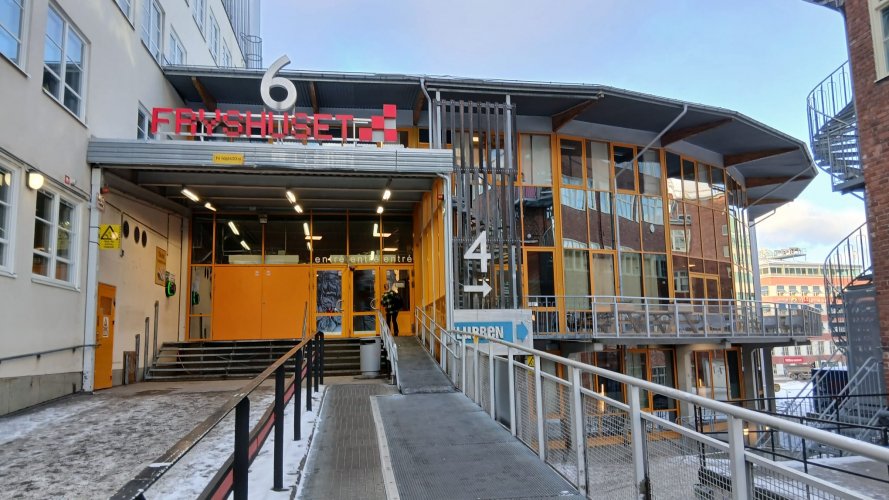
From January 25 to January 29, our organisation activists Linda and Alise went on a study visit to Stockholm to visit Sweden's largest non-profit youth organization Fryshushet. It has been operating for 40 years and its scale is admirable and inspiring for the development of new ideas. This organization was founded and financed by Anders Carlberg, who wanted to create a place where young people could grow, realize their potential, and find their place in society by providing them with the necessary opportunities and support. Fryshushet does not belong to any political or religious association and is guided by the belief that encouragement, trust, responsibility, and understanding are essential in supporting young people.
Fryshushet is both a youth organization and a school with branches in other Swedish cities. Here, young people can get involved in various extracurricular activities: participate in sports games, play music, learn to dance, skate, because there is a huge indoor skate park here. The Fryshushet building has several recreation rooms and a café where different communities meet. For example, the LGBT+ community organizes a social event once a week, and it is simply a place where young people can come, make new friends, relax, and have a good time.

During the study visit, several Fryshushet employees introduced us to the Swedish prison system and volunteer work in it. Sweden has high, medium, and low security prisons. Volunteers often go to Kulm, Sweden's largest prison. Their visits to the prison are individual, when one volunteer meets with one youngster who is in prison. These meetings are often one-off, and in subsequent sessions the volunteer will meet with another one. The meetings usually take place without the presence of prison staff, but if the young people want to meet with relatives, prison staff are present in the room. In Sweden, the most serious crimes are related to drug and weapon smuggling. Gangster groups are very common here. The Swedish government are building new prisons and investing considerable resources in them, which cannot be said about the development and maintenance of the resocialization and social inclusion system.
Alise shared her thoughts on what she had heard: "I was really surprised that Sweden has a much higher crime rate than Latvia and that the crimes committed there are much more deliberate and dangerous. For example, bombings and shootings. An interesting fact to mention is that young people are greatly influenced by Swedish rap and rappers, which creates an illusion and encourages them to become gangsters and pursue a criminal lifestyle. "
As in Latvia, young people here also highly value volunteer visits and classes in prison. Society plays a very important role when a young person is released from prison. Although young people would like to lead a more normal life, this is not so easy to achieve, as often both the environment and circumstances are disruptive.
We also visited the Swedish probation service and the RFS. What we saw at the probation service was truly inspiring. Linda shares her thoughts: “Although the probation system and available funding in Sweden differ from those in Latvia, we learned about several examples that are not related to the size of the budget. I was happy to hear about how important employee well-being is. The probation office had rooms for rest and sleep, free tampons and sanitary pads in the toilets, employees were allowed to visit the doctor during working hours, there were mandatory and helpful supervisions every month, and several physically and emotionally safe work mechanisms had been developed. This experience encourages me to continue involving public officials who work with young people in international exchanges and training.
But RFS is a non-governmental organization founded in 1968 that promotes volunteer work for the benefit of society. They provide information, train and support people who do volunteer work and promote its importance in Swedish society. RFS cooperates with the probation service and the prison administration. RFS usually trains volunteers to become contact persons or guardians for young people on probation, or they can become mentors or support persons in prisons.

We also attended an anti-violence seminar organized by Fryshushet, where Hector, who had completed the Homeboy Industries rehabilitation program, shared his inspiring story. Homeboy Industries is a place that provides support to former gang members and prisoners. Hector's story was candid, poignant, and inspiring. Hector talked about how young people get involved in gangs and commit crimes. Often, behind the crime lies a vulnerable young person who wants to be loved and needed. Circumstances and environment can be challenging, which sooner or later pushes young people to commit crimes. The gangster lifestyle can seem tempting and exciting to young people, because everyone wants to be rich, influential, drive with expensive cars, be stylish and accepted. But at what price? Hector's story made me think about the limits of humanity. Often, in order to obtain all these things, it is necessary to break the law, to use force, to hurt someone or take something away from them. It is nice to hear success stories where a person has realized that they have made a mistake and understood that it is possible to live differently, that there is another way.
This publication has been produced with the financial support from the Nordic Council of Ministers. The content of this publication is the sole responsibility of the coordinators of this project and does not necessarily reflect the views or policies of the Nordic Council of Ministers.
