Do we need to protect the Baltic Sea?
Do we need to protect the Baltic Sea?
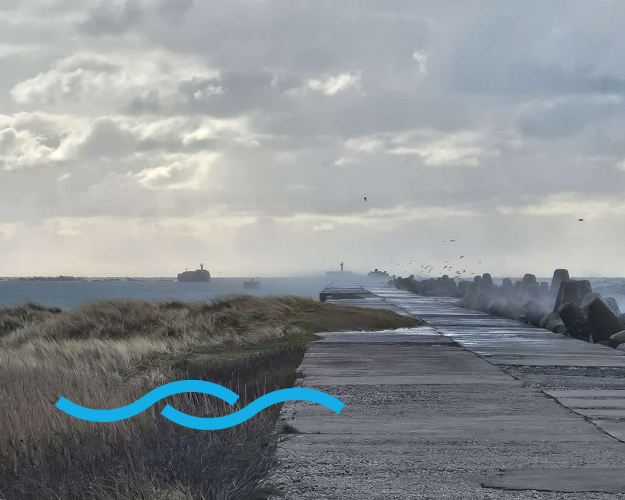
For coastal people the sea is close every day. But that does not make it ordinary or less important. For me, the sea is a source of inspiration, peace, and energy. The sea helped my ancestors survive. The sea is full of stories, memories, and traditions. The white, wide beaches and the unpredictable wind are the trademark of Liepāja. But behind its beautiful sunsets and wild charm, there is a hard reality – today, the Baltic Sea is one of the most polluted seas in the world. Human pollution, microplastics in nature, and water eutrophication have created a situation where we must pay much more attention to protecting the Baltic Sea.
To change this story and turn words into action, the organization "Radi Vidi Pats" joined the international project CoDe Sea (Concrete Deeds for the Baltic Sea).
What is the CoDe Sea project and who is taking part?
The main goal of the project is to change people’s daily habits in waste management, recycling, and sustainable food consumption through practical work and by involving local communities. It also aims to make the public more aware of the ecology of the Baltic Sea.
The project brings together a consortium of 9 organizations from 9 countries. Volunteers are hosted in six countries around the Baltic Sea, but participants also come from other European regions to ensure an intercultural experience and wider impact:
-
Hosting countries: Finland (Allianssi Youth Exchanges - coordinating organization), Latvia (Radi Vidi Pats), Estonia (EstYES), Germany (Turbina Pomerania / Kultur- und Initiativenhaus Greifswald), Poland (Association for Promotion of Voluntary Service), and Sweden.
-
Partner countries: Greece (ELIX), Serbia (Young Researchers of Serbia), and Ukraine (Union Forum).
During two years (2026–2027), the project will organize 20 volunteering teams with a total of 200 young people. A special focus is on making sure that half of the volunteers are youth with fewer opportunities. The project also works together with Ukrainian associations to support young war refugees.
Extra help arrives in Liepāja
Today, there is a lot of excitement at Radi Vidi Pats because 10 young people are arriving to start their European Solidarity Corps (ESC) volunteering mission. Using non-formal education and hands-on methods, they will learn by doing and give back to the city. The volunteers will do practical beach cleanups and monitor the amount and type of waste. They will also learn about local sea protection measures, share their experience with local residents, and create an informative poster. This material about the state of the Baltic Sea and how our small daily choices can help save it will be available to everyone in Liepāja.
Follow our sea stories
For the next two weeks, our social media accounts will fill with "sea stories" – educational facts, behind-the-scenes moments of the volunteers, waste monitoring results, and practical tips for a cleaner and nicer beach for everyone.
The activity is part of the ESC project CoDeSea co-funded by the European Union.
Funded by the European Union. Views and opinions expressed are however those of the author(s) only and do not necessarily reflect those of the European Union or EACEA. Neither the European Union nor EACEA can be held responsible for them. (EACEA stands for Education, Audiovisual and Culture Executive Agency).